
What Is a Vietnam Motorbike Tour Really Like? A Day-by-Day Look at the Experience
Few travel experiences match the raw immersion of crossing Vietnam on two wheels. You don’t just watch the limestone peaks of Ha Giang, the tiered emerald paddies of Mu Cang Chai, or the misty jungle ridges of the Ho Chi Minh Trail drift past a bus window—you smell the woodsmoke from stilt houses, battle the mountain switchbacks, and taste roadside iced coffee (cà phê sữa đá) while chatting with mountain hill-tribe communities.
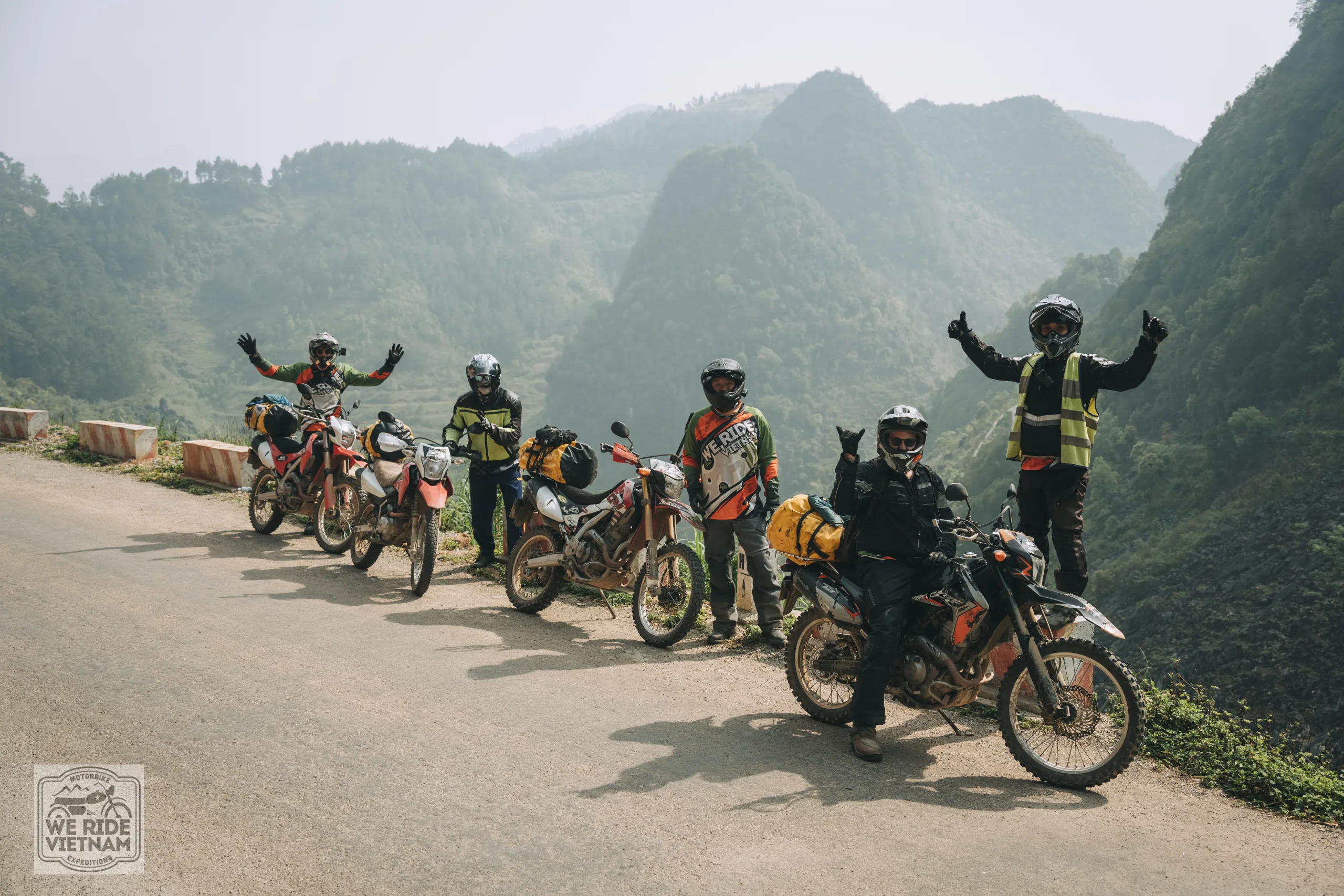
If you are thinking about booking an adventure, you likely have questions: Is the traffic as chaotic as people say? How technical is the off-road riding? What happens if I drop the bike?
Here is a raw, detailed, day-by-day look at what a guided Vietnam motorbike tour is really like with We Ride Vietnam.

What a Typical Day on Tour Looks Like
Every tour differs based on whether you are tackling the extreme north border or descending the central jungles, but a standard day on the road follows a thrilling, well-calibrated rhythm:
- 07:00 AM – Awakening & Fuel: You wake to mountain mist and roosters calling from the valley below. Breakfast is hot and filling: bowls of fragrant beef or chicken Phở, freshly made omelettes, crusty baguettes, and rich Vietnamese drip coffee.
- 08:00 AM – The Morning Briefing: Tour guides go over the day’s route, highlighting sharp hairpin turns, road construction, weather changes, and fuel stops. Bikes have already been checked, chains oiled, and tire pressures adjusted by the support mechanic.
- 08:30 AM to 12:30 PM – Mountain Carving: The morning leg. You ride through steep mountain passes, winding single-track, or dirt switchbacks. Groups ride in staggered formation with a lead guide navigating and a sweep rider bringing up the rear to ensure nobody gets left behind. Stoppages happen roughly every 60–90 minutes for viewpoints, photos, and water.
- 12:30 PM to 01:30 PM – Roadside Feast: Lunch is at family-run mountain eateries. You dine on fresh stir-fried pork with lemongrass, morning glory greens, tofu in tomato broth, and steaming jasmine rice.
- 01:30 PM to 04:30 PM – Remote Passes & Village Tracks: The afternoon leg takes you deeper into rural Vietnam—crossing hanging bridges, skirting river canyons, and passing through ethnic minority hamlets where kids line the trail to wave.
- 05:00 PM – Arrival & Post-Ride Debrief: Roll into a local traditional homestay or mountain lodge. Boots come off, cold beers (Bia Hà Nội) are opened, and bikes are lined up for nightly checks.
- 07:00 PM – Family Dinner & “Happy Water”: An evening feast around a shared table hosted by your local village family. Count on toasts of homemade corn or rice wine (rượu, affectionately known as “Happy Water”), accompanied by laughter and incredible stories with your fellow riders.

What Kind of Roads and Trails Do You Ride?
Vietnam’s riding terrain is among the most diverse on the planet. Over the span of a single week, you will encounter:
- Silky Mountain Asphalt: Pristine sweeping bends climbing high passes like Ma Pi Leng, O Quy Ho, and the Hai Van Pass.
- Remote Concrete Single-Tracks: Meter-wide paths built across mountainsides to connect isolated ethnic minority villages.
- Gravel & Broken Tarmac: Rural backroads undergoing repairs, testing your line choice and standing balance.
- Jungle Dirt & Mud Tracks: Depending on your tour level, routes can include rugged clay trails, loose river-rock climbs, and bamboo forest paths.

How Difficult Is the Riding?
The difficulty depends entirely on the route you book:
- Leisure / Paved Touring (Beginner to Intermediate): Routes like Mai Chau, Pu Luong, and coastal sections of the Ho Chi Minh Trail run primarily on paved asphalt with moderate elevation changes.
- Standard Mountain Routes (Intermediate): Ha Giang Loop and Northwest loops include steep gradients, hundreds of sharp switchbacks, blind corners, and patches of gravel or slick asphalt.
- Hard Enduro / Extreme Off-Road (Advanced): Demands dirt-riding experience—mud slogs, deep ruts, loose rock climbs, and river crossings.
What Motorbikes Are Used?
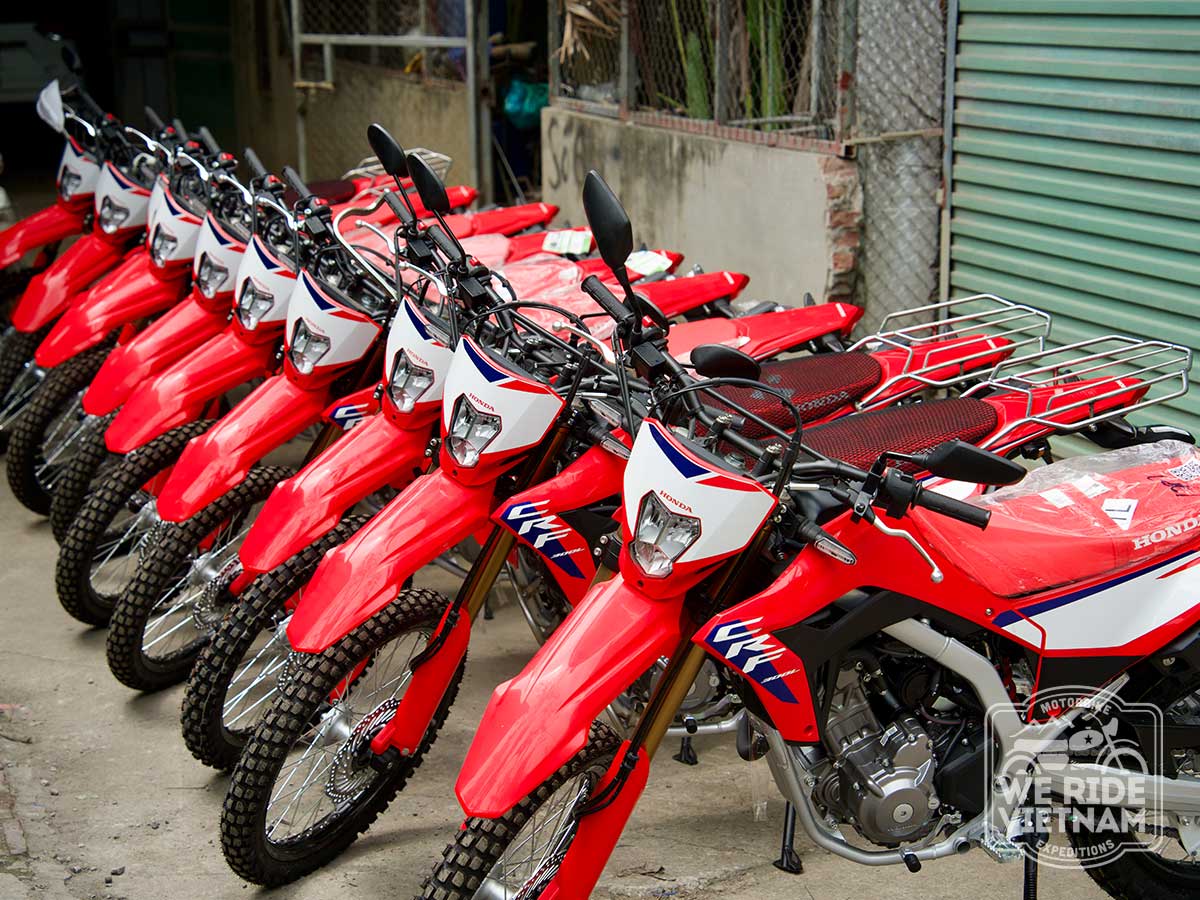
Riding rough terrain on a beaten-up automatic scooter or an unreliable Chinese copycat bike can ruin a trip. [We Ride Vietnam](https://weridevietnam.com) maintains its own purpose-built fleet:
- Honda XR150L: Lightweight, forgiving, ultra-reliable, and accessible for shorter riders or those seeking a comfortable, low-stress ride.
- Honda CRF250L & CRF300L: The gold standard for dual-sport adventure in Vietnam. With long-travel Showa suspension, high ground clearance, and punchy single-cylinder torque, they soak up both mountain potholes and technical off-road trails with ease.
- Honda CB500X: Available for riders planning longer, highway-oriented cruising trips down the length of the country on the Ho Chi Minh Trail.
- US Army Jeeps: Traveling with a partner or friend who does not ride two wheels? Tour convoys often include classic open-top 4×4 Jeeps so non-riders can share the exact same itinerary.

What Is Accommodation Like?
Expect a balanced, authentic mix:
- Authentic Hill-Tribe Homestays: Sleep in traditional wooden stilt houses run by Tay, White Thai, Dzao, or H’mong families. Homestays provide clean private mattresses, mosquito nets, hot-water showers, and Western-style plumbing, paired with peerless mountain hospitality.
- Eco-Lodges & Boutique Resorts: In locations like Mai Chau, Pu Luong, or Sapa, you will often rest at scenic lodges with infinity pools overlooking tiered rice terraces.
- Comfortable 3-to-4-Star Hotels: Utilized in larger regional towns (e.g., Cao Bang, Dong Van, Dien Bien Phu, Hoi An) with air conditioning, en-suite bathrooms, and laundry services.
What Meals Are Included?
You won’t be surviving on energy bars. Vietnamese food on tour is fresh, locally sourced, and abundant:
- Breakfast: Hot Phở bò (beef noodle soup), eggs with fresh baguettes (bánh mì), fruit, and local coffee.
- Lunch & Dinner: Feasts consisting of crispy spring rolls, grilled lemongrass chicken, wok-tossed pork, caramelised fish in clay pots, wild mountain vegetables (rau rừng), and vegetarian dishes tailored to dietary preferences.

What to Pack: A Quick Checklist
- Riding Gear: A high-quality adventure/motocross helmet (modular or dirt helmet with goggles), ventilated jacket with CE-rated armor, knee/shin guards, reinforced riding gloves, and sturdy ankle-protecting boots.
- Base Layers: Quick-dry synthetic shirts and moisture-wicking socks.
- Weather Protection: A breathable lightweight rain suit (or high-end Gore-Tex gear) and a light fleece/thermal layer for cool mountain mornings.
- Personal Essentials: Electrolyte tablets, sunscreen, insect repellent, international driving permit (IDP 1968), and a dry-bag/backpack for essentials while luggage rides in the support vehicle.
Riding in Vietnamese Traffic: How Intimidating Is It?
Leaving downtown Hanoi or Danang can feel overwhelming at first. Motorbikes swarm from every angle, horn-honking is non-stop, and crosswalk rules seem non-existent.
The reality: Vietnamese traffic operates like a school of fish. It flows slowly, fluidly, and predictably. The horn is not used out of anger—it is an audio courtesy beacon meaning “I am behind you on your left.”
On a guided tour, your lead rider navigates the pack out of city centers, setting a calm pace and blocking intersections so you escape the congestion quickly and reach wide-open rural valleys.
| Feature | Paved-Road Touring | Off-Road Adventure |
|---|---|---|
| Pace | Brisk, continuous, sweeping curves | Slower, technical, highly focused |
| Physical Effort | Low to moderate fatigue | Demanding; requires standing on pegs |
| Terrain | Smooth asphalt, high passes, coastal roads | Mud, rock beds, single-track, river crossings |
| Best For | Scenery lovers, two-up couples, cruising | Dual-sport enthusiasts, enduro riders |
Weather and Riding Conditions
Vietnam spans over 1,600 km North to South and includes varying microclimates:
- Spring (March–May): Warm, mostly dry, and vibrant green across the country.
- Autumn (September–November): Considered the premier riding season in the Northern mountains (Ha Giang and Northwest)—dry tracks, golden ripe rice harvests, and crisp temperatures.
- Winter (December–February): Mountain passes can drop down to 5–10°C (41–50°F) with fog, while Central and Southern Vietnam remain balmy.
- Monsoon Summer (June–August): Spectacular, green landscapes punctuated by heavy afternoon tropical rainstorms that make off-road trails slick and exciting.
What Happens If You Damage or Drop the Bike?
Tipping over at low speed on a remote trail happens to even seasoned riders.
- On guided tours: The accompanying mechanic inspects the bike immediately. Scratched plastic fairings, bent levers, or flat tires are swapped or repaired on the spot within minutes.
- Fair repairs: Unlike predatory rental scams in tourist traps that charge exorbitant fees for minor scratches, professional outfits like We Ride Vietnam charge honest, factory-direct wholesale replacement costs for damaged functional parts.
How Experienced Do You Need to Be?
You do not need to be an enduro pro to ride Vietnam, but you should be confident balancing a clutch and changing gears on manual bikes.
- For complete beginners or unconfident riders, shorter paved routes (such as Hanoi Countryside or Mai Chau 2–3 day tours) offer a gentle introduction.
- For routes like the deep Ha Giang Loop or Northwest mountain traverses, riders should have at least 1,000 km of road motorcycle experience under their belt.
Guided Tour vs. Riding Vietnam Independently
Solo backpackers often rent cheap scooters to ride the country, but joining a guided tour unlocks a fundamentally different tier of experience:
- Safety & Mechanical Support: If your bike snaps a chain or punctures a tire 50 km from civilization, a support mechanic has you moving in minutes rather than leaving you stranded.
- Hidden Routes: Guided itineraries route you away from tourist-packed bus arteries onto quiet military roads, secret trails, and border paths invisible on Google Maps.
- Zero Planning Friction: Accommodations, permits (crucial for northern border zones), meals, and itineraries are pre-arranged seamlessly.
- Cultural Translation: Having a local guide bridges linguistic gaps with village elders, explaining deep cultural traditions and opening doors you couldn’t access alone.
Meeting Local People and Visiting Remote Villages
Vietnam is home to 54 distinct ethnic groups, many living in the Northern mountains (such as the Black H’mong, Red Dzao, and Tay).
A motorbike tour is your backstage pass to their world. You will ride past colorful weekly mountain markets, meet craftsmen forging machetes by hand, watch women weave indigo hemp, and be invited into family living rooms to share tea and fresh sunflower seeds. The warmth and hospitality of Vietnam’s rural communities frequently ends up being the highlight of every rider’s journey.
frequently ends up being the highlight of every rider’s journey.
What Riders Usually Enjoy Most
Ask a rider who just completed a tour what they loved most, and you rarely hear about the horsepower of the bike. They talk about:
- The Sheer Freedom: Carving empty ribbon asphalt clinging to thousands of feet of canyon wall with zero traffic.
- The Camaderie: Bonds forged with fellow riders and local guides after conquering a challenging track together.
- The Homestay Evenings: Sitting cross-legged on polished wood floors, sharing home-cooked food, exchanging toasts of “Một, hai, ba, dô!”, and feeling completely disconnected from the hustle of the outside world.
Ready to Experience Vietnam from the Saddle?
Whether you are looking to take on the limestone labyrinth of Ha Giang, trace wartime history along the Ho Chi Minh Trail, or carve mountain passes in the far Northwest, a motorbike tour will change the way you see travel forever.
Explore itineraries, check group dates, or build your custom trip at We Ride Vietnam today.